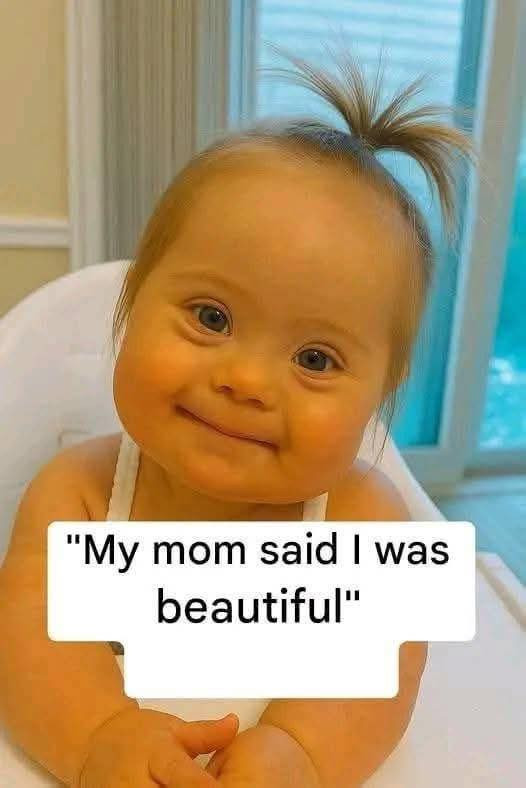
A baby with Down syndrome is a child born with a genetic condition caused by the presence of an extra copy of chromosome 21 (trisomy 21). This extra genetic material affects the baby’s physical growth, facial features, and sometimes intellectual development.
Here’s a clear overview:
🧬 Causes
-
Down syndrome occurs randomly due to an extra chromosome 21.
-
It is not usually inherited; most cases happen spontaneously during the formation of reproductive cells.
-
The likelihood increases slightly with maternal age over 35.
👶 Common Features in Babies
-
Flattened facial profile, especially the nose
-
Almond-shaped eyes that slant upward
-
Small ears and a short neck
-
Poor muscle tone (hypotonia)
-
Single deep crease across the palm (simian crease)
-
Smaller hands and feet
-
Short stature
🩺 Health Considerations
Babies with Down syndrome may have higher risk of:
-
Heart defects (present at birth)
-
Hearing or vision problems
-
Thyroid disorders
-
Gastrointestinal issues
-
Respiratory infections
🌱 Development
-
Developmental milestones (sitting, walking, talking) may be delayed, but most children learn and develop skills at their own pace.
-
Early intervention programs, physical therapy, speech therapy, and occupational therapy help support growth and learning.
❤️ Supporting a Baby with Down Syndrome
-
Provide love, attention, and encouragement.
-
Attend regular medical checkups to monitor heart, thyroid, and growth.
-
Encourage play and learning from an early age.
-
Connect with support groups and community resources for families.
Babies with Down syndrome can lead full, happy, and meaningful lives, and many grow up to live independently or semi-independently with support.
If you want, I can provide a practical care guide for the first year of a baby with Down syndrome, including feeding, sleeping, early therapy, and health checkups.
Do you want me to do that?
